
Reviewed 22 November 2026.
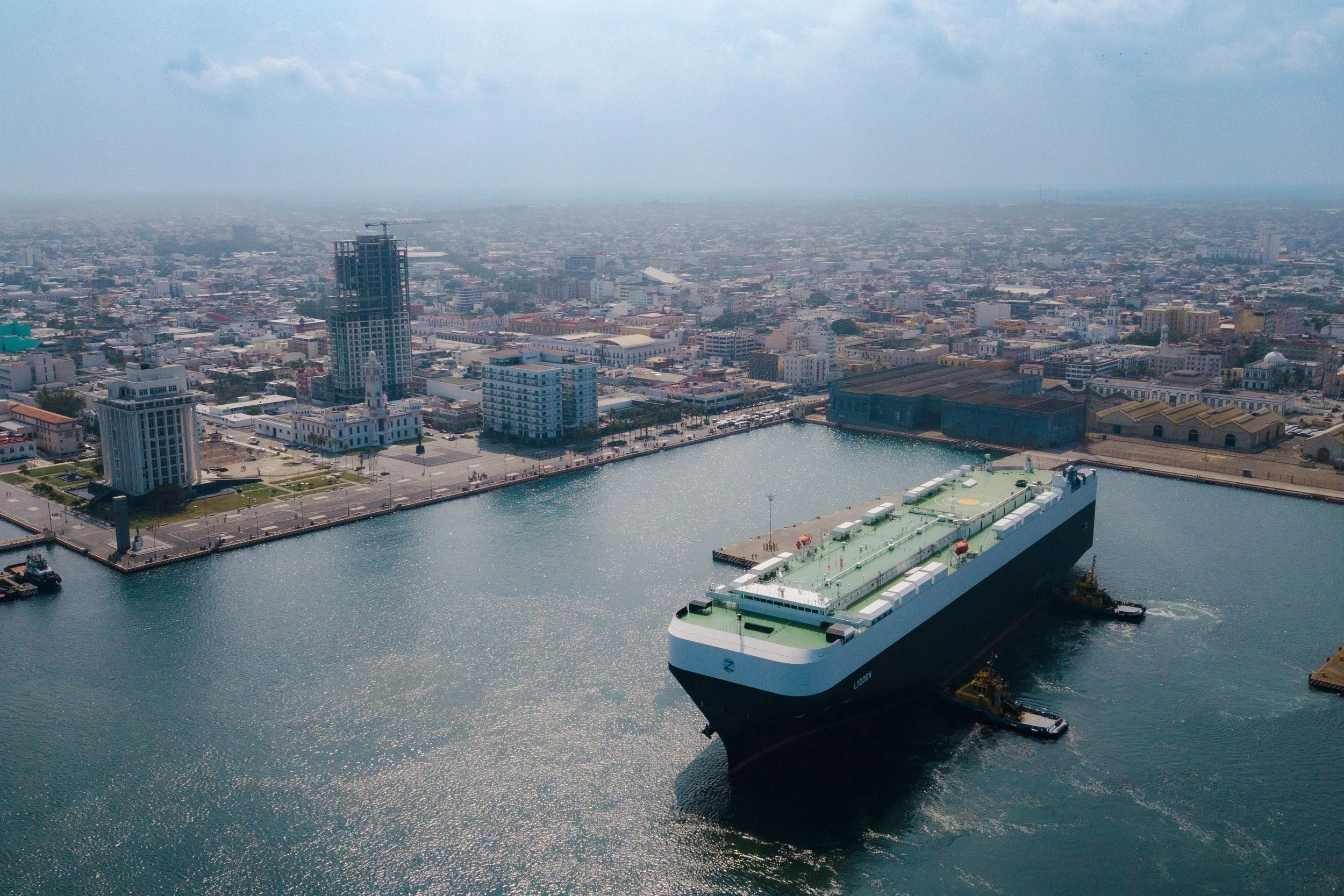
The Interoceanic Corridor of the Isthmus of Tehuantepec is Mexico's attempt to move cargo between the Pacific and the Atlantic by rail, across the narrowest part of the country. A 308-kilometer line links the port of Salina Cruz, Oaxaca, with the port of Coatzacoalcos, Veracruz. The government presents it as a dry canal, an overland alternative to the Panama Canal at a time when that canal is short of water and its queues are long.
This article explains where the idea came from, how much Mexico has spent, how the corridor compares with Panama, and whether it can change global trade. Companies weighing a site or a partner in the region can go straight to our due diligence guide for corridor investors.
An idea older than the Panama Canal
The isthmus has been proposed as an ocean crossing for centuries. In the 1880s the American engineer James Eads designed a ship railway that would have carried entire vessels across it on rails. Mexico opened the Tehuantepec National Railway in 1907, and for a few years it carried heavy traffic between the two oceans. The Panama Canal opened in 1914 and took that traffic. The line then declined for most of a century, which is why the press calls the current project the revival of a 100-year-old railway.
The revival began in 2019. The federal government created an agency, known by its Spanish initials CIIT, to rebuild the railway, expand the ports at each end and develop industrial parks along the route. The Mexican Navy oversees the agency.
What has been built
Line Z, the coast-to-coast line, has operated since December 2023. Line FA, from Coatzacoalcos to Palenque, Chiapas, has operated since September 2024. Line K runs toward the Guatemalan border. Its first section opened in November 2025, and the official project overview schedules the remaining sections for the end of 2026.
Four ports belong to the program: Salina Cruz, Coatzacoalcos, Dos Bocas and Puerto Chiapas. Bloomberg Businessweek México reported in August 2026 that more than 800 kilometers of track had been put into operation.
How much has Mexico invested?
Mexico has invested at least MXN 70 billion in the corridor since 2019, according to the same Bloomberg report, which describes the project as a bet of about USD 4 billion. For comparison, the expansion of the Panama Canal completed in 2016 cost more than USD 5 billion.
Public spending has since slowed sharply. An El Universal analysis published in July 2026 found that Congress budgeted MXN 48.2 billion for the railway across 2025 and 2026. The Finance Ministry then cut MXN 43.5 billion of that, and MXN 4.7 billion was spent.
Private investment is the part still to arrive. The industrial parks were designed to attract it, and they remain largely empty, as explained below.
How it compares with the Panama Canal
The two are not the same kind of asset. In the year to September 2026 the Panama Canal handled 13,951 ship transits and 521 million tons, and its revenue reached a record USD 6.6 billion. About 20 million containers pass through Panama each year. Mexico's target for the corridor is 1.4 million containers a year by 2035, which is about 7 percent of Panama's volume.
The method also differs. A ship passes through the canal in eight to ten hours with its cargo on board. In the corridor, cargo is unloaded at one port, carried across by train and loaded onto a second ship at the other port. Mexican officials say the rail crossing takes about seven hours and a full port-to-port transfer about 24 hours. A large container ship carries more than 10,000 containers, and a freight train carries a few hundred. The corridor therefore suits some cargo and not all of it.
Where the corridor has an advantage is geography and water. Salina Cruz is less than four days by sea from Los Angeles, and Coatzacoalcos is about 36 hours from Houston and Mobile. The canal's locks run on fresh water from Gatún Lake. During the 2023 drought the canal authority cut crossings to 24 a day, from a normal 34 to 36. Waits have at times grown from a couple of days to three weeks, and in 2026 a supertanker reportedly paid a record USD 4.6 million to skip the queue. A railway does not depend on rainfall.
There is evidence that the route works for the right cargo. Hyundai Glovis moved 900 vehicles across the isthmus in March 2025. In July 2026 the Veracruz government reported a second crossing of 3,000 vehicles. Vehicles roll on and off rail cars easily, which makes them a natural fit.
Could it change global trade?
Not by replacing Panama. Even at its 2035 target the corridor would carry a small fraction of what the canal carries. Jean-Paul Rodrigue, a transport geographer at Texas A&M University, told Bloomberg that world trade has great inertia and takes a great deal of effort to redirect.
The realistic case is narrower, and it has two parts. The first is insurance. Panama's drought, the conflict around the Strait of Hormuz and attacks on shipping in the Red Sea have all disrupted sea routes in the same few years. When a canal slot can cost millions of dollars at auction, a second route across the Americas has value even if it carries a modest share of cargo.
The second is manufacturing. Mexico overtook China in 2023 as the largest exporter of goods to the United States. A factory on the isthmus could receive components from Asia at Salina Cruz and ship finished goods from Coatzacoalcos to the US Gulf coast in under two days. That is the reason the program includes 14 industrial parks with federal tax incentives. If those parks fill, the corridor's significance will be as a new manufacturing region in southern Mexico, where more than half the population lives in poverty.
What stands in the way
The cargo is not yet what the plan describes. In the first half of 2026, 95 percent of the cargo handled at Salina Cruz was energy and petroleum products. Container traffic remains limited.
The industrial parks are behind. Canacintra, the national manufacturing chamber, said in July 2026 that no companies were operating in them. It cited a lack of natural gas, poor road connections, insufficient basic services and legal uncertainty. Bloomberg reported that five of the 14 park concessions had been awarded. Power is a specific constraint: most sites have access to no more than 30 megawatts, and a single aluminum plant already authorized would need about 400.
Safety has also drawn attention. A passenger train derailed on Line Z on 28 December 2025 and 14 people died. The government attributed the accident to excess speed. A freight train derailed on the same stretch in July 2026 without injuries. Officials acknowledge that consolidating the corridor will take longer than first planned.
What it means for companies looking at the corridor
The corridor is built, operating and unfinished. The opportunity is real: land, incentives and a new route to the US market. The risk sits in the specifics. Who holds the rights over a site? Do the power and water exist today? Who owns the local partner? Government backing for the program does not vouch for the private developers, landowners and contractors an investor will actually sign with.
Warden Consulting was founded in 1995 and works from Mexico City. Our due diligence is supervised by investigating lawyers and combines corporate, property and court records with field verification. If you are assessing a developer, a site or a partner in the corridor, read our due diligence guide for corridor investors, see our due diligence services in Mexico or write to office@wardenconsulting.com.
Frequently asked questions
How long is the Interoceanic Corridor of the Isthmus of Tehuantepec?
The coast-to-coast railway, Line Z, is about 308 kilometers long. The wider network, including the lines to Palenque and toward Guatemala, exceeds 800 kilometers.
How long does cargo take to cross?
Mexican officials state about seven hours by rail and about 24 hours from port to port. The actual time for a shipment depends on port handling and on the sailing schedules at each end.
Will the corridor replace the Panama Canal?
No. Its 2035 target is about 7 percent of the containers that pass through Panama. It is better understood as a second route for certain cargo and as a base for manufacturing aimed at the United States.
Is the corridor finished?
It is being delivered in stages. The coast-to-coast line operates, further rail sections are scheduled, and the industrial parks are at an early stage.
This article is general information, not legal or investment advice.